





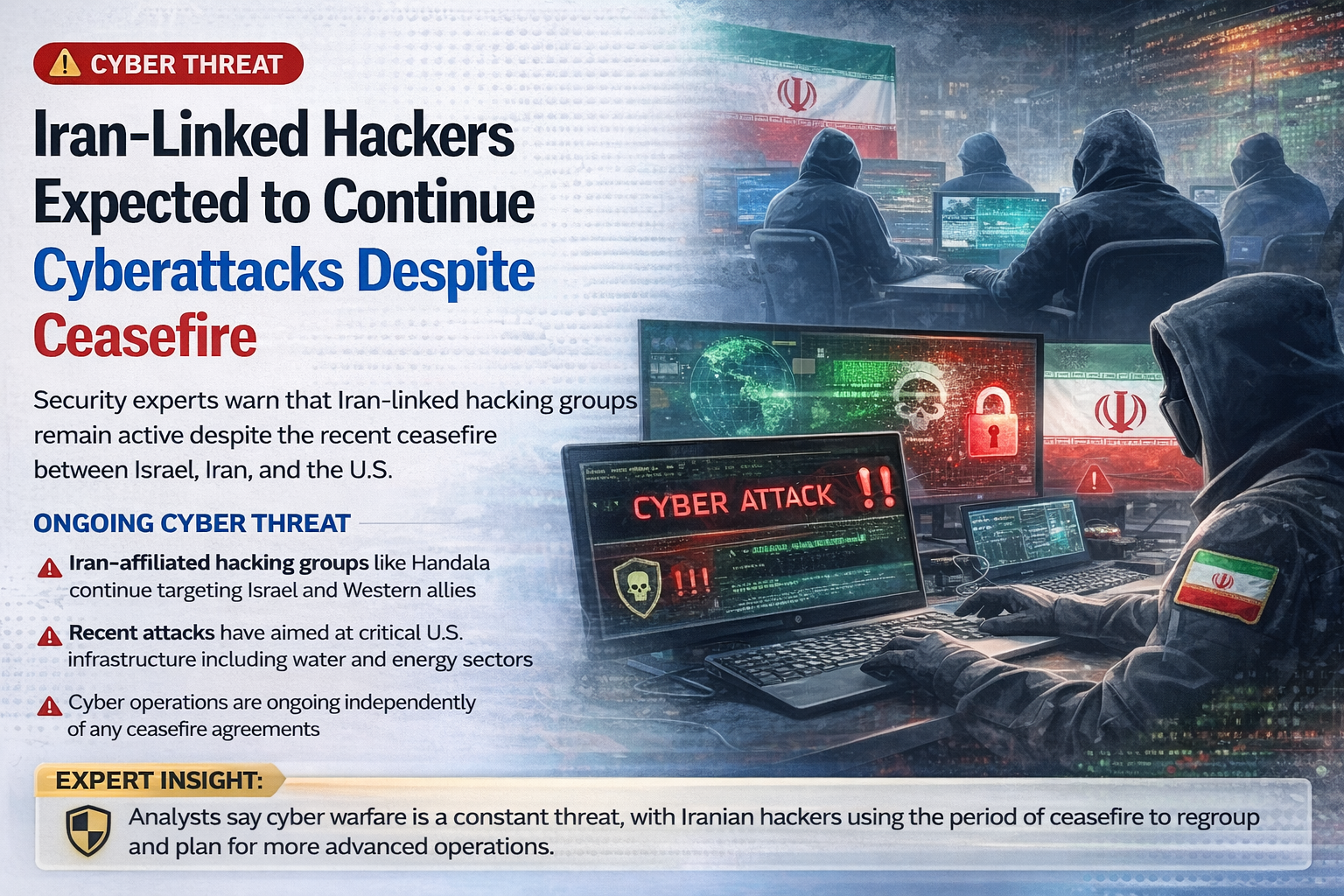
A fragile ceasefire between Iran, the United States, and Israel is unlikely to bring an end to cyberattacks, as Iran-linked hacking groups continue to view cyberspace as an active battlefield despite the pause in military hostilities.
Security experts warn that pro-Iranian hacker groups have already signaled their intent to continue operations, even as diplomatic efforts attempt to stabilize the region. One such group, known as “Handala,” indicated that while attacks on U.S. targets may be temporarily paused, cyber operations against Israel and other perceived adversaries are expected to persist.
The ongoing cyber activity reflects a broader shift in modern warfare, where digital attacks operate independently of physical ceasefires. Analysts note that cyber campaigns are often used for retaliation, intelligence gathering, and psychological impact, making them less likely to stop during diplomatic pauses.
Recent incidents highlight the scale of the threat. Iran-linked actors have been associated with attempts to infiltrate critical infrastructure systems, including water and industrial control networks in the United States. These attacks, even when unsuccessful, expose vulnerabilities in essential services and raise concerns about future disruptions.
Cybersecurity agencies, including U.S. federal authorities, have issued warnings that organizations in sectors such as energy, healthcare, and infrastructure remain at elevated risk. Experts believe that attackers may use the ceasefire period to regroup, refine tactics, and prepare more sophisticated operations.
The persistence of cyberattacks despite a halt in physical conflict underscores how digital warfare has become a permanent layer of geopolitical tension. Unlike conventional military operations, cyber campaigns can be conducted continuously, anonymously, and across borders, making them difficult to deter through traditional diplomatic agreements.
As tensions remain high and negotiations continue, analysts caution that the cyber front of the conflict is unlikely to cool down anytime soon, reinforcing the need for stronger defenses and constant vigilance across critical systems worldwide.