





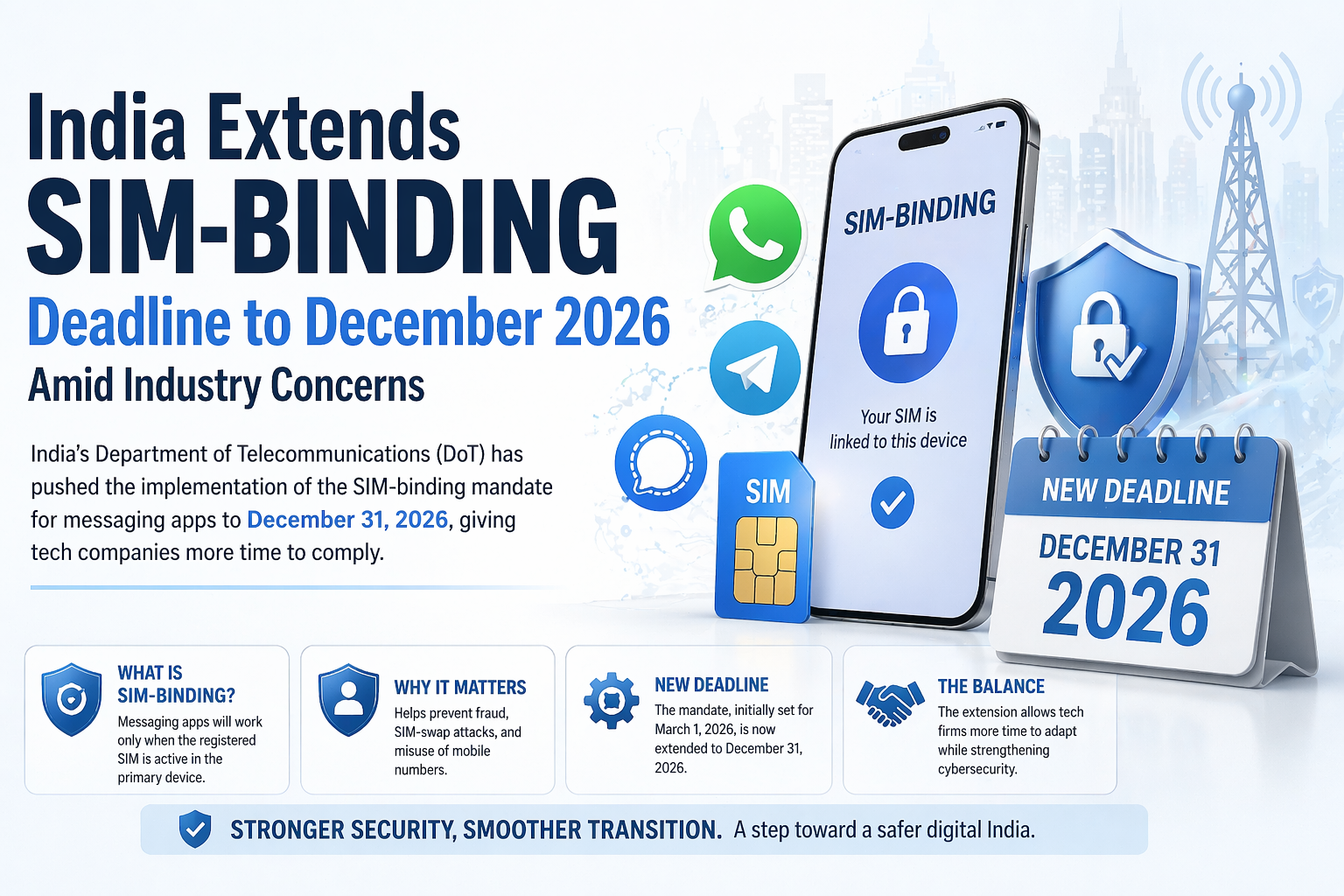
India’s Department of Telecommunications (DoT) has extended the deadline for implementing mandatory SIM-binding for messaging platforms, offering relief to technology companies while maintaining its broader push to strengthen cybersecurity and curb digital fraud.
The SIM-binding mandate, which requires apps like WhatsApp, Telegram, and Signal to remain continuously linked to a user’s active SIM card, was initially scheduled to take effect from March 1, 2026. The rule is designed to ensure that messaging services function only when the registered SIM is physically present in the user’s primary device, reducing misuse of mobile numbers and preventing cyber fraud.
However, following industry pushback and implementation challenges, the government has now pushed the compliance deadline to December 31, 2026, giving companies additional time to adapt their systems.
The move reflects a more pragmatic approach by policymakers, balancing cybersecurity priorities with the technical and operational concerns raised by industry stakeholders. Technology firms had earlier warned that continuous SIM verification could disrupt multi-device functionality, affect user experience, and require significant changes to app infrastructure.
Under the SIM-binding framework, messaging platforms must periodically verify that the original, KYC-linked SIM card remains active in the device. If the SIM is removed or changed, the apps may automatically log users out, limiting unauthorized access and reducing risks such as SIM-swap fraud and digital impersonation.
The policy is part of India’s broader telecom and cybersecurity reforms aimed at increasing traceability and accountability in digital communications. Authorities have emphasized that such measures are essential to combat rising cybercrime, including phishing scams and fraudulent activities conducted through messaging platforms.
At the same time, experts note that the deadline extension signals the government’s willingness to refine its approach. By allowing more time, regulators aim to ensure smoother implementation without disrupting millions of users who rely on these platforms for daily communication.
The development highlights the growing importance of regulatory frameworks in shaping digital ecosystems, as governments worldwide seek to balance user privacy, platform usability, and national security in an increasingly connected world.